01
01
↑
↓

returntotheocean.com

return to the ocean

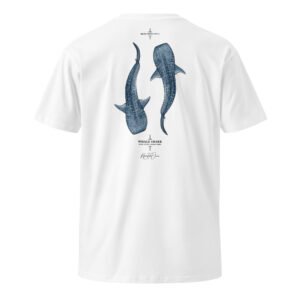
whale shark

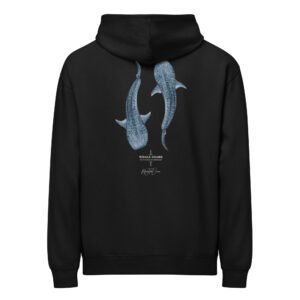
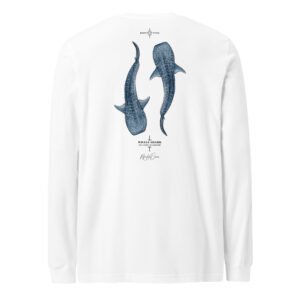
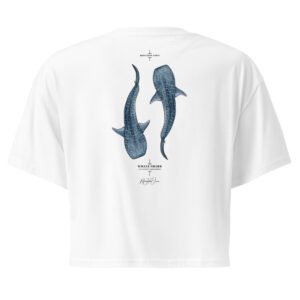
The largest fish in the ocean — each one marked with a pattern completely its own.

shop the collection

the whale shark

Rhincodon typus

meet the animal

about the whale shark

Despite their massive size and shark-shaped body, whale sharks are entirely harmless filter feeders — gliding through the water with their mouths open, straining plankton, krill, and small fish through specialized filter pads instead of teeth. As they move between feeding grounds, they help transport nutrients across vast stretches of ocean, playing a quiet but critical role in the health of the ecosystems they pass through.

Each whale shark’s spot pattern is as unique as a fingerprint, and researchers use photo-identification to track individual sharks across years and thousands of kilometers of migration. Despite their size and global range, whale sharks are still classified as Endangered, threatened by ship strikes, bycatch, and targeted fishing in parts of their range.

RACHEL BROOKS

meet the artist

About rACHEL BROOKS

Based in the Scottish Highlands, Rachel Brooks brings this Whale Shark to life through pointillism and ink — building the design from thousands of tiny, deliberate marks, the same painstaking technique she’s used to become one of the most recognized names in scientific marine illustration. Rachel isn’t drawing from imagination alone here, either — with a background in zoology and eight years working as a scuba instructor across the Indo-Pacific, she’s dived alongside whale sharks herself, and channels that firsthand experience into every piece rather than working from a photo. She calls her own practice “artivism” — art as activism — using intricate, scientifically accurate illustration to reconnect people with a species most will only ever see in a picture like this one.


ECOCEAN

the cause we're supporting

About ECOCEAN

This design supports Ecocean, an Australian marine conservation charity founded by marine biologist Dr. Brad Norman. Ecocean built and runs the Whale Shark Photo-Identification Library — a citizen-science database that uses a star-mapping algorithm, originally developed for the Hubble Space Telescope, to match individual whale sharks by their unique spot patterns. Since launching, it’s grown into the largest whale shark database in the world, with over 47,000 photos and 22,000 sightings submitted by divers and researchers, driving real insight into how this endangered species moves, lives, and where it needs protecting most.

EXPLORE MORE

YOU MIGHT ALSO LIKE

Shopping Basket
Scroll to Top