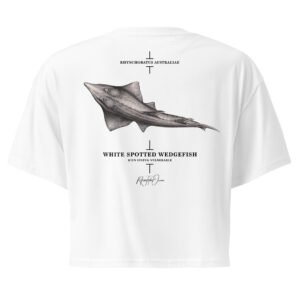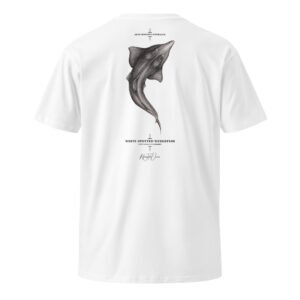
At first glance, a white spotted wedgefish looks like a shark. It has a tall dorsal fin, a shark-like tail and swims like a shark. Then you notice the flat, wedge-shaped head and the white spots, and realise you are looking at something very different. Wedgefish are rays, and they are among the most threatened animals in the ocean.
Here is the science behind the white spotted wedgefish, the artist who painted our design, and the Maldivian research project your purchase supports.
Meet the white spotted wedgefish (Rhynchobatus australiae)
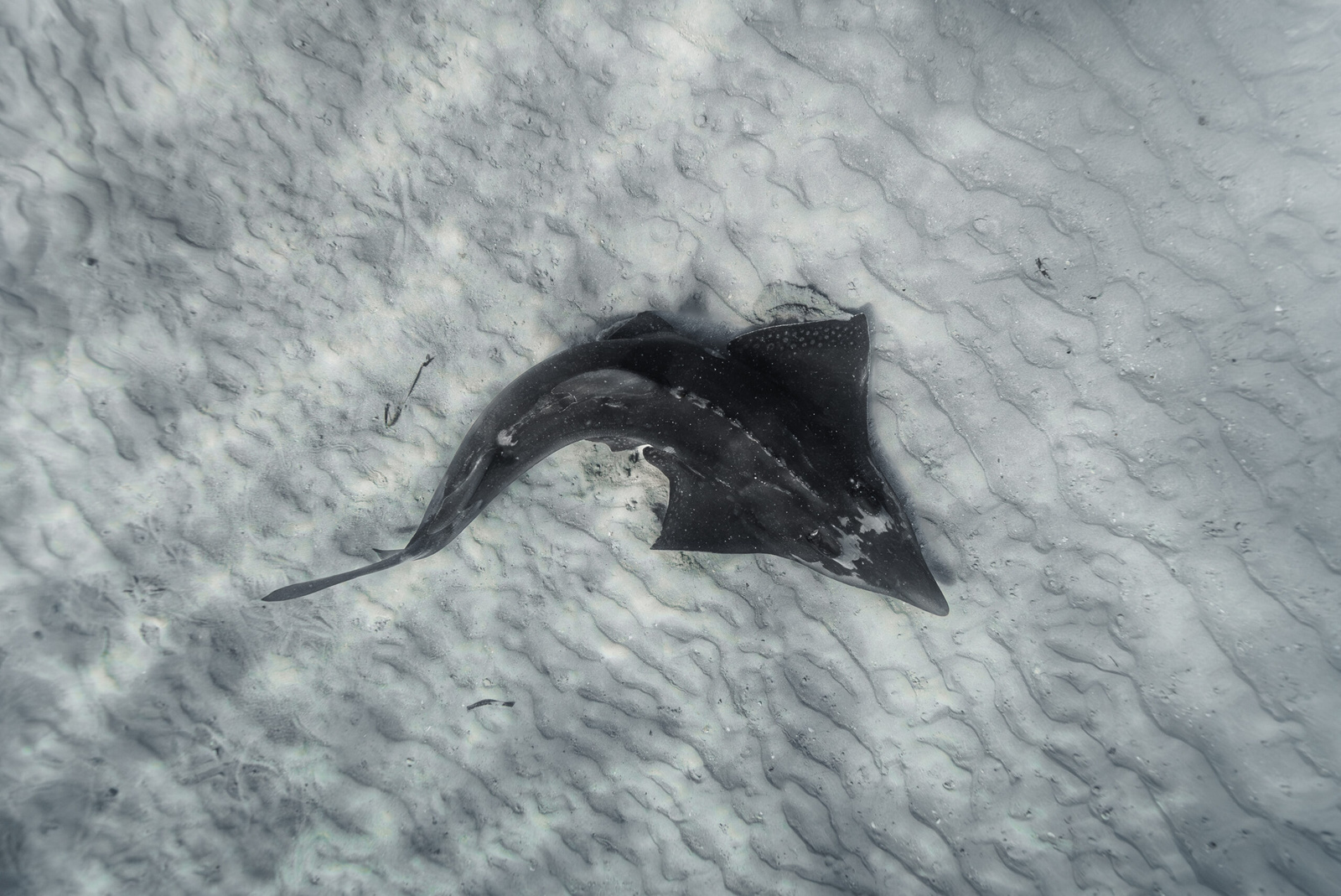
The white spotted wedgefish lives in shallow coastal waters across the tropical Indo-West Pacific, from East Africa and the Maldives through Southeast Asia to northern Australia. It can grow to around three metres long, with a pointed, wedge-shaped snout, a grey-brown back scattered with white spots and a dark spot ringed with white near the base of each pectoral fin.
Wedgefish spend most of their time near the seafloor, cruising over sand, mud and the edges of reefs.
Shark or ray? The science of a hybrid body
The easiest way to tell a shark from a ray is to look at where its gill slits are. Sharks have gill slits on the sides of their head. Rays have them on the underside. Wedgefish have them underneath, which places them firmly with the rays.
Wedgefish belong to the order Rhinopristiformes, the “shark-like rays”, alongside guitarfishes and sawfishes. Rays split from sharks more than 200 million years ago, and while most rays evolved flat, wide bodies for life on the seafloor, this group kept a more shark-like body plan with a strong tail for swimming. It is a reminder that evolution often arrives at similar shapes from different directions.
In the Maldives, the wedgefish’s local name captures this perfectly. In Dhivehi, it is called Madimiyaru, which literally means “ray-shark”.
Biology of a bottom hunter
- A diet from the seafloor. Wedgefish feed on crabs, prawns, squid, molluscs and small fish, hunting along soft bottoms and reef edges. As mid-level predators, they help keep these communities in balance.
- Live young. Like their relatives, wedgefish give birth to live pups that develop inside the mother on a yolk sac. Litters are small, and females do not breed every year.
- Gentle by nature. Despite their size and shark-like look, wedgefish are slow, harmless animals. They often rest on the bottom and are easy for divers, and unfortunately fishers, to approach.
One of the ocean’s most threatened families
That gentle nature has made wedgefish tragically easy to catch. They live in shallow waters where fishing is intense, and their large, pale fins are some of the most valuable in the global shark fin trade, known in markets as “white fin”. They are also caught for their meat and as bycatch in trawls and nets.
The result has been a collapse. Wedgefish and their close relatives, the giant guitarfishes, are now considered the most threatened family of sharks and rays in the world, with nearly every species listed as Critically Endangered, including the white spotted wedgefish. Across much of their range, numbers have dropped by more than 80% over the last few decades.
In 2019, wedgefishes were listed on Appendix II of CITES, meaning international trade in their fins must now be regulated. Northern Australia remains one of the last strongholds for the species.
The artist: Sofie Seyah
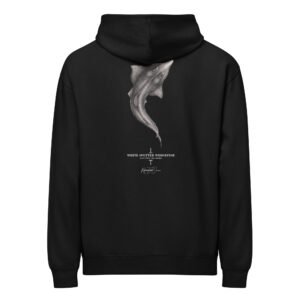
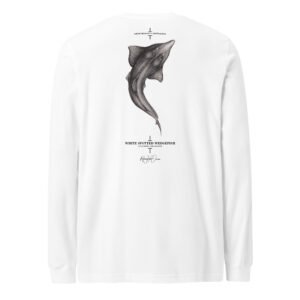
Our White Spotted Wedgefish design was created by Sofie Seyah, a Western Australian artist and former marine scientist. Sofie painted this wedgefish in watercolour, building the design through soft washes of colour rather than hard outlines. It gives the piece a fluid, almost underwater quality that suits an animal so rarely seen.
The initial piece came entirely from Sofie’s own imagination, however in the end using a highly detailed photo captured by Return to the Oceans founder, Jake Mason (the one at the start of this article), the wedgefish artwork was born. That combination of a medium built for movement and an eye trained on Western Australia’s own waters gives the artwork its sense of life. Sofie also illustrated our Great Hammerhead design.
40% of the profits from this design go directly to Sofie.
The cause: the Miyaru Project
Every White Spotted Wedgefish purchase supports the Miyaru Project, a Maldivian NGO based in Fuvahmulah and dedicated to shark and ray research and conservation.
Miyaru’s researchers work alongside local communities and international scientists to study the Maldives’ shark and ray populations. In 2026, they opened the country’s first Shark Research and Conservation Hub in Fuvahmulah, a dedicated space for research, education and citizen science. Fuvahmulah is part of a UNESCO Biosphere Reserve that is home to some of the highest shark and ray diversity on Earth, and much of it is still barely studied.
Shop the White Spotted Wedgefish collection
Wear the wedgefish and help give it a future. 40% of profits from this design go directly to the artist, and 30% of Return to the Ocean’s profits are donated to ocean conservation.